Working Papers
Working Papers
Does State Violence Legitimize Authoritarian Rule? Evidence from the Salvadoran Gang Crackdown
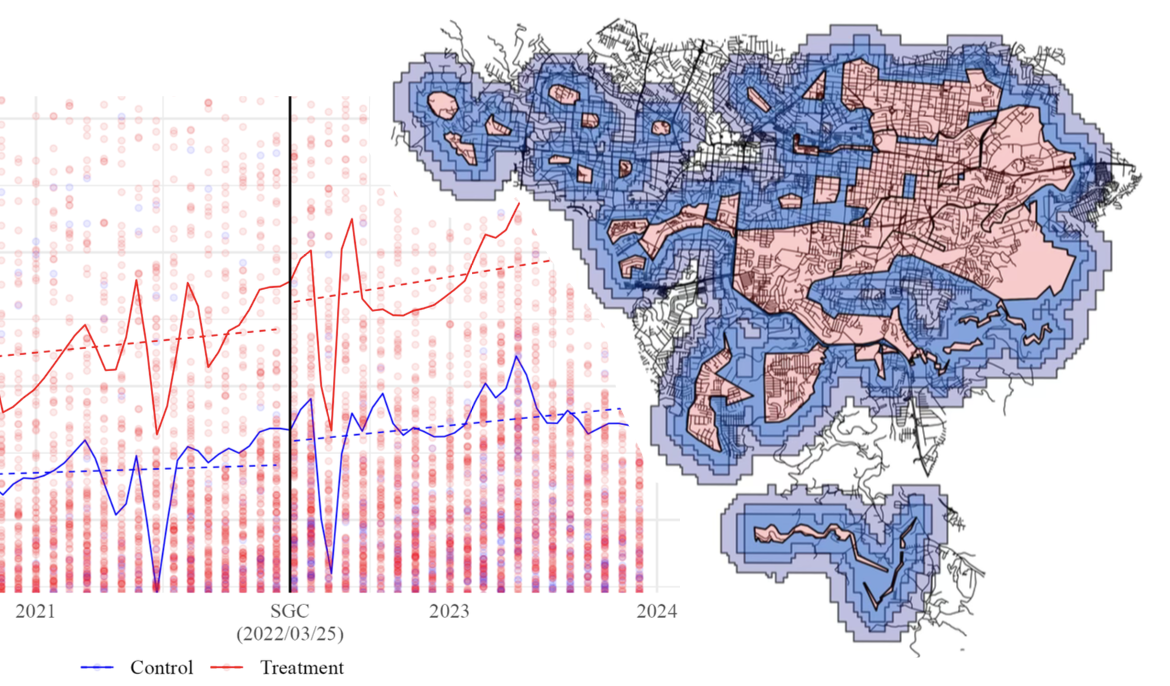
Does state violence legitimize authoritarian rule? Recent work contrasts a common view that autocrats use repression not only to eliminate threats, but also to build support. I extend the legitimation logic of repression beyond political opponents, arguing that in high-crime settings state violence against organized criminal groups builds support for autocrats when it delivers security. I study the Salvadoran Gang Crackdown (SGC), which suspended civil rights and jailed over 1.3% of the population. First, I use gang-control data and NASA nighttime lights as a public-safety proxy to estimate the crackdown's effect. Second, I link these local safety changes to geocoded survey data. The SGC caused an 11.55% larger increase in nighttime lights in historically high-violence areas, and local safety gains are positively associated with support for authoritarian rule. The findings indicate how coercive governance earns durable legitimacy in high-violence settings when it improves bystanders' living conditions.